Benchmark-backed supply chain homepage inspirationSupply Chain FAQ
Quick answers based on our supply chain website benchmark dataset.
What are the best supply chain websites?
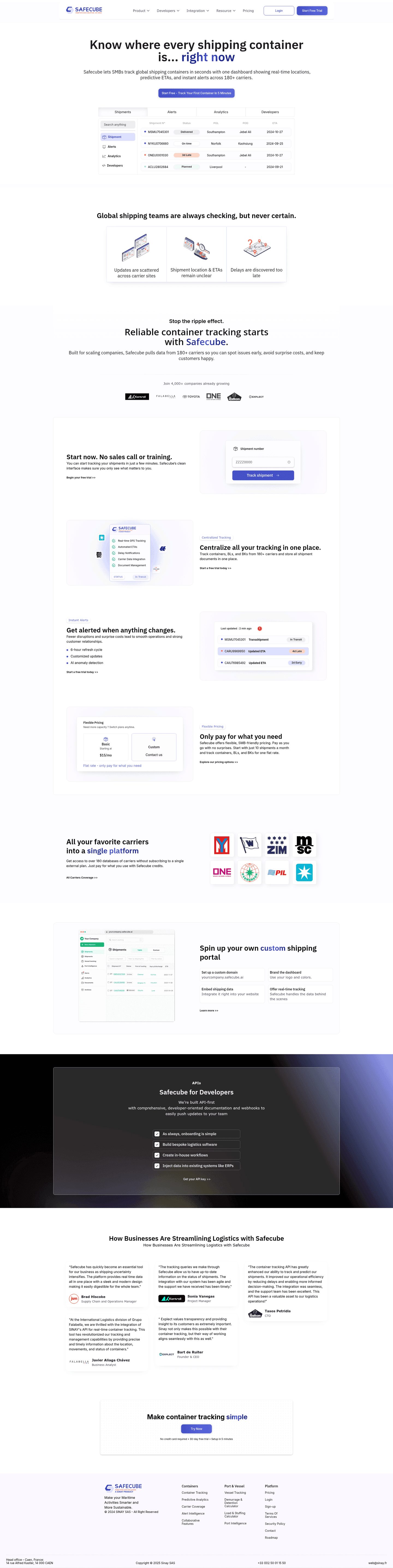
[01]The strongest performers in this June 2026 benchmark are Safecube, Flexport, and Settel. We reviewed 3 pages against the same 60+-point conversion rubric, so the ranking reflects section-level execution (hero, trust, features, CTA) rather than brand familiarity.
What makes supply chain websites harder to convert than other B2B pages?
[02]Supply chain software sells to operations teams that need proof of reliability and integration fit before trusting a new vendor. Across 3 pages reviewed, the pages that convert, Safecube, Flexport, Settel, lead with a concrete workflow ("track every shipment across carriers," "move freight with your own visibility layer"), not abstract "platform" language, and surface integration partners or shipment volume above the fold.
What is the biggest design mistake on supply chain homepages?
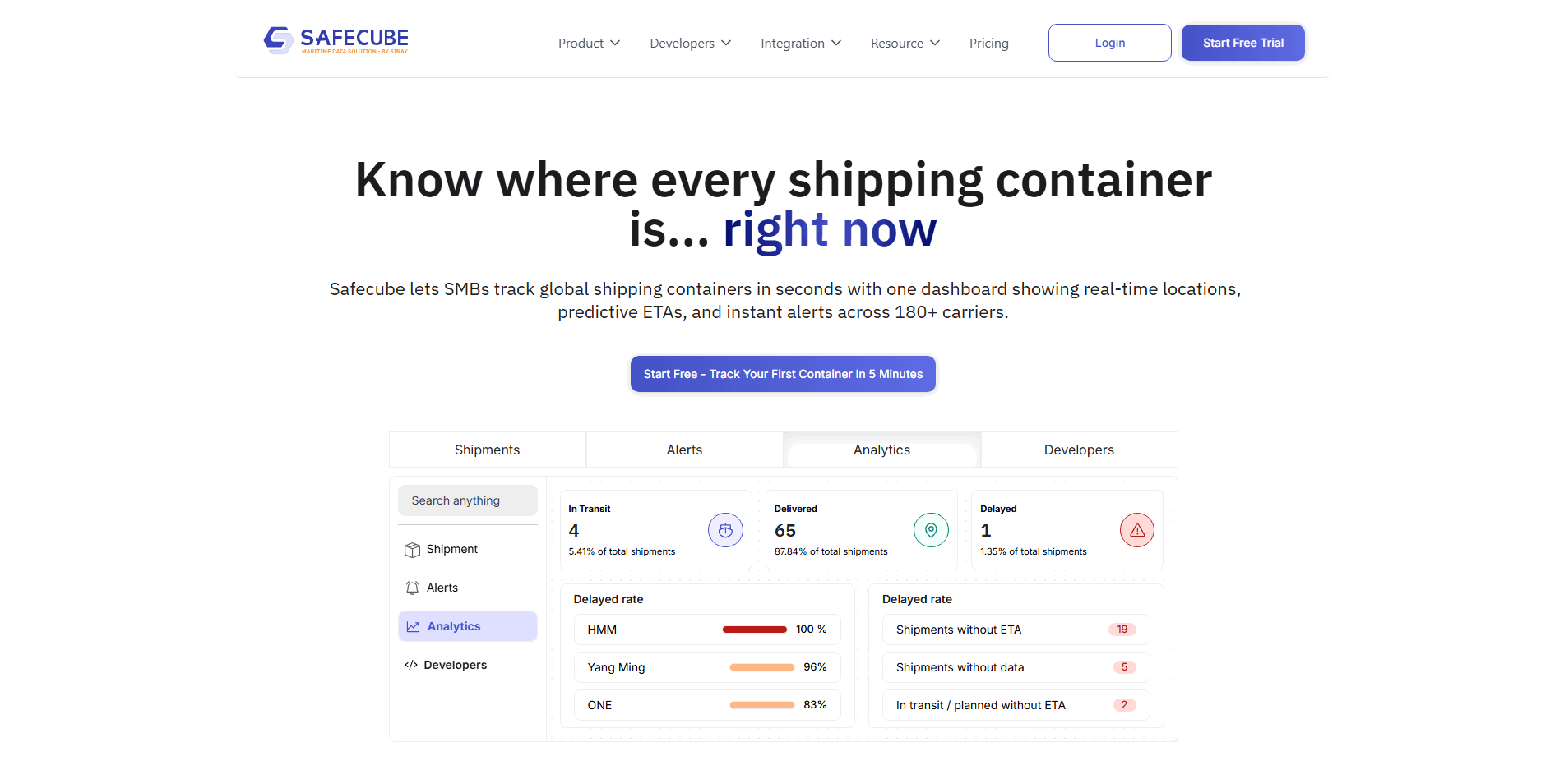
[03]Leading with abstract platform language while delaying concrete workflow examples. The average page scored 43.6 across 3 homepages reviewed. Top performers replace jargon with something a logistics manager can evaluate in ten seconds: Flexport's named freight lanes, Safecube's explicit tracking surface, Settel's integration proof. If the visitor can't tell what your product actually tracks or manages, they leave.
What sections should a supply chain homepage include?
[04]A strong supply chain homepage includes a clear hero naming the logistics problem, an early trust layer (carrier logos, shipment volume, integration partners), a product walkthrough showing the real workflow, use-case routing for operations versus procurement versus IT, and a CTA that matches operations buying expectations (demo, pilot, or a data-fit call, rarely a pure self-serve signup). Safecube and Flexport are concrete templates for how this stacks together.
How many supply chain examples do I need to review before redesigning?
[05]Three to five strong examples are usually enough. With 3 pages benchmarked and only 0% reaching top-scoring, section-level comparison (hero vs hero, trust vs trust) matters more than collecting full-page references. Study Flexport for category-leader clarity, Safecube for tracking-surface specificity, and Settel for integration positioning.
How do I audit my supply chain homepage?
[07]Use a structured rubric that checks clarity, trust, and friction instead of relying on subjective feedback. Run your page through the landing page analysis for a section-by-section score.